Fall Protection OSHA & ANSI Guidelines
With so much on the line, ensure your company is in compliance
When it comes to fall safety, you know you need to worry about accidents and injuries, but there are also the potential costs of OSHA violations to consider. Regulations for fall protection systems and equipment are constantly changing. It’s important for you to remain in compliance so you don’t get hit with costly fines.
Fortunately, when you partner with Diversified Fall Protection, we keep you updated when there are changes to current standards and provide regular fall safety inspections to keep your systems up to date. Learn about the current OSHA fall protection regulations and ANSI standards, or talk to a member of our team today to request a fall hazard assessment.
OSHA Fall Protection Regulations to Know
The Occupational Safety and Health Administration (OSHA) is the division of the US Department of Labor responsible for overseeing workplace safety. OSHA fall protection regulations are mandatory and carry the weight of law.
Explore the important regulations you should know when it comes to your fall protection system.
OSHA defines walking-working surfaces as “any horizontal or vertical surface on or through which an employee walks, works, or gains access to a work area or workplace location.” OSHA regulations related to walking-working surfaces help lessen the annual number of deaths and injuries caused by slip, trip, and fall hazards. Having proper fall protection in place that is OSHA-compliant will help your employees and your overall business.
-
1910.21 - Scope and Definitions
-
1910.22 - General Requirements
-
1910.23 - Ladders
-
1910.24 - Step Bolts and Manhole Steps
-
1910.25 - Stairways
-
1910.26 - Dockboards
-
1910.27 - Scaffolds and Rope Descent Systems
-
1910.28 - Duty to Have Fall Protection and Falling Object Protection
-
1910.29 - Fall Protection Systems and Falling Object Protection - Criteria and Practices
-
1910.30 - Training Requirements
-
1910.140 - Personal Fall Protection Systems
Falls are one of the leading causes of worker fatalities in the construction industry. According to OSHA, construction related falls result in 150-200 deaths and 100,000 injuries each year. Ensuring you’re OSHA compliant on your job sites ensures your employees are safe.
-
1926.500 - Scope, Application and Definitions Applicable to This Subpart
-
1926.501 - Duty to Have Fall Protection
-
1926.502 - Fall Protection Systems Criteria and Practices
-
1926.503 - Training Requirements
-
1926 Subpart M App A - Determining Roof Widths - Non-Mandatory Guidelines for Complying with 1926.501(b)(10)
-
1926 Subpart M App B - Guardrail Systems - Non-Mandatory Guidelines for Complying with 1926.502(b)
-
1926 Subpart M App C - Personal Fall Arrest Systems - Non-Mandatory Guidelines for Complying with 1926.502(d)
-
1926 Subpart M App D - Positioning Device Systems - Non-Mandatory Guidelines for Complying with 1926.502(e)
-
1926 Subpart M App E - Sample Fall Protection Plan - Non-Mandatory Guidelines for Complying with 1926.502(k)
A Breakdown of ANSI Fall Protection Guidelines
The ANSI Z359 Fall Protection Code was introduced in the early 1990s to promote clear, updated safety standards to fall protection equipment manufacturers and employers. Since then, the scope of ANSI Z359 has expanded beyond equipment standards to include fall hazard identification, personnel training and requirements for third-party testing.
Toggle through the codes below to learn more.
ANSI Z359 Fall Protection Codes
-
The Z359.1 code was updated in 2016 to provide a general overview with information regarding the scope of each standard.
-
For organizations where employees are exposed to fall hazards, this standard establishes guidelines and requirements for an employer’s managed fall protection program, including:
- Policies, duties and training
- Fall protection procedures
- Eliminating and controlling fall hazards
- Rescue procedures
- Incident investigations
- Evaluating program effectiveness
-
Requirements for the design, manufacture, testing and performance of lanyards and positioning lanyards are included in this standard. Review the Z359.13 standard for guidelines surrounding shock absorbing lanyards.
-
Find requirements for rescue systems, including:
- Automatic descent devices
- Personnel hoists
- Synthetic rope tackle blocks
-
For engineers with experience designing fall protection systems, this standard specifies requirements for the design and routine performance of complete active fall protection solutions, including travel-restraint, vertical and horizontal fall arrest systems.
-
This standard establishes requirements for certification of ANSI Z359 fall protection products and components as well as guidelines for third-party testing, witness testing and manufacturer self-certification of fall protection products and components.
-
Explore guidelines and recommendations for the design, manufacture, testing and performance of full body harnesses.
-
This standard establishes requirements for connecting components, including performance, design, marking, qualification test methods and removal from service. Noteworthy updates from ANSI/ASSP Z359.1-2007:
- Decreased test loads for buckles and adjusters to align with international standards
- Added dynamic strength testing for snap hooks and carabiners
- New guidelines for abrasion testing and weather conditions
-
For energy absorbing lanyards and personal energy absorbers, this standard establishes requirements for performance, design, marking, qualification testing, inspection, maintenance and removal from service. Horizontal lifelines are not included in this standard.
-
This standard establishes requirements for performance, design, qualification testing, marking and instructions, as well as inspection, maintenance, storage and removal from service for the following self-refracting devices:
- Self-retracting lanyards (SRLs)
- Self-retracting lanyards with integral rescue capability (SRL-Rs)
- Self-retracting lanyards with leading edge capability (SRL-LEs)
-
Find design and testing specifications for single anchor lifelines and fall arrest systems, typically referred to as vertical lifelines. Window cleaning equipment is not included in this standard.
-
This standard indicates design, performance and testing requirements for ladder climbing safety systems.
-
Design, performance and testing requirements for anchorage connectors are outlined in this standard, including roof anchors. There are outlines for three types of anchorage connectors with requirements for each.
Your trusted fall protection partner
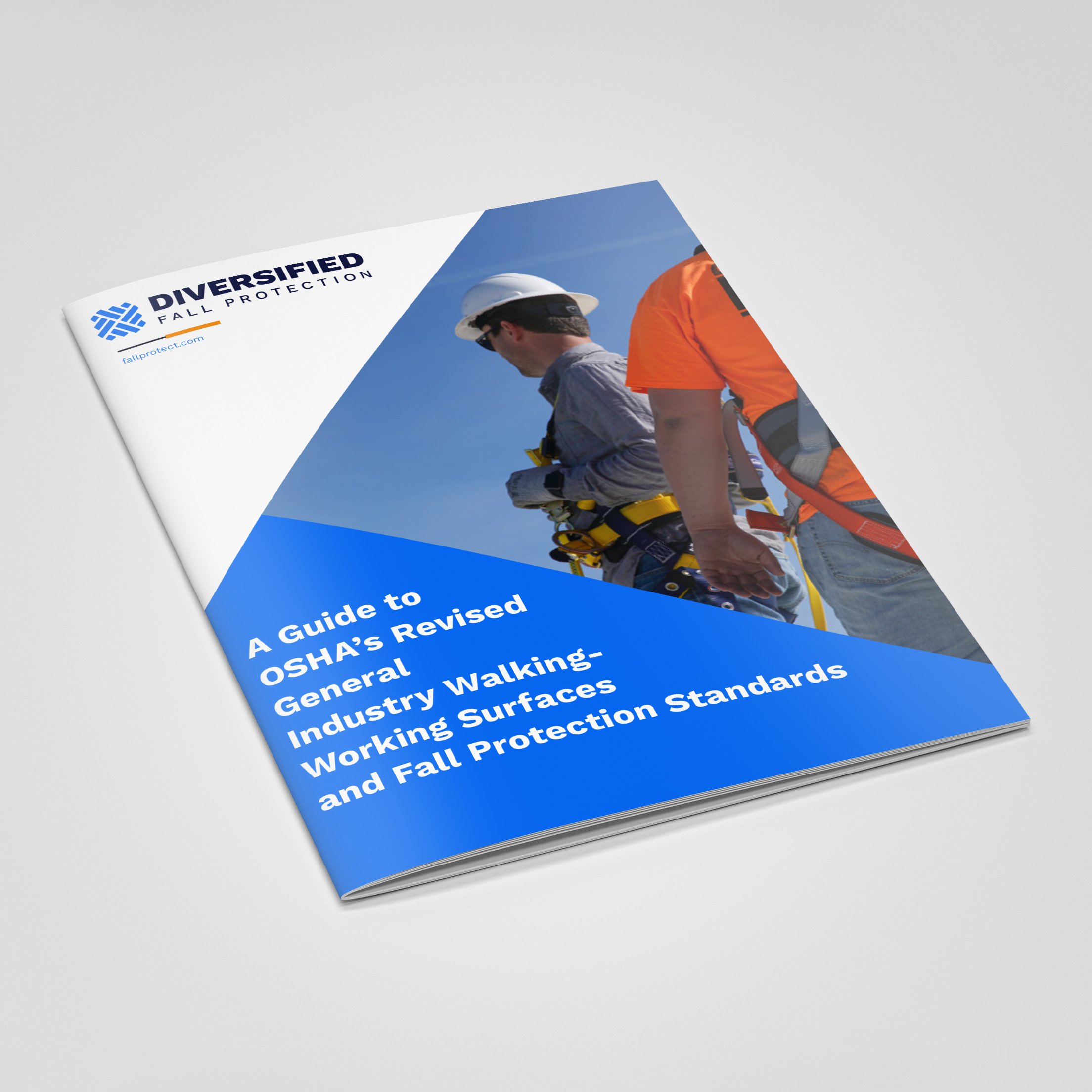
Have additional questions about OSHA's latest regulation updates? We've made a free Comprehensive Guide to OSHA's Updated Walking-Working Surface Standard. Download it below!
Schedule a fall safety inspection
When was your last fall hazard assessment? With OSHA penalties expected to rise 80%, now is the time to make sure your company is in compliance. Protect your workers and your business with an inspection from DFP.