Access Platforms, Stairs, & Gangways
Roof Top Fall Protection
Guardrails
Catwalks
Crane Rail
Confined Space & Rescue
Horizontal Lifelines
Vertical Lifelines & Ladders
Personal Protective Equipment
Truck Fleet
Steel & Foundry
Machine Guard
General Industry
Municipalities
Oil – Gas – Petrochemical
Construction
Aircraft Hangars
Rail Car
Uni-Track
Single Point Anchors
Uni-Grab / Uni-Ridge
Swing Gates
Roof Hatch System

Vertical Lifelines and Ladder Safety

Sadly, many injuries and fatalities at industrial and construction sites are due to falls while climbing ladders. Most are preventable with the use of proper fall protection equipment and fall protection training for workers.

Partnering with the right team of OSHA-compliance fall protection specialists can eliminate job-related ladder climbing falls that result in serious injury or death. But how do you pick the right team?


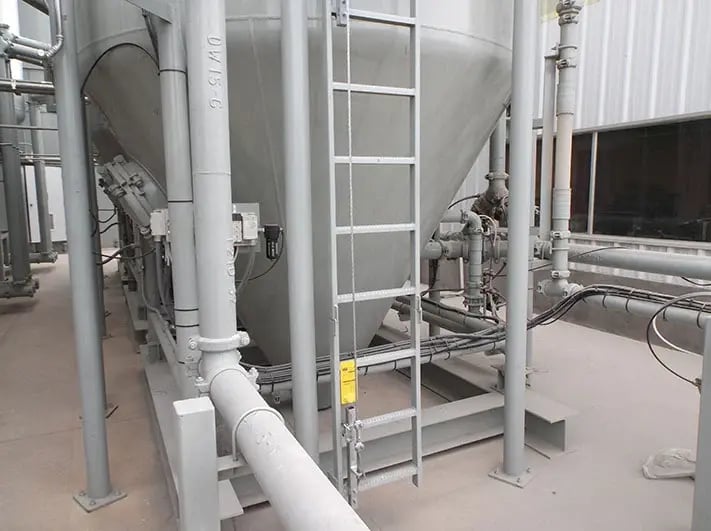
Vertical lifeline provides safe ladder
access into a confined space area.

If you find yourself asking yourself the following types of questions, consider a partnership with DFP to assess the safety of your workers and facility.

Safety Tip: DFP recommends equipping all ladders with vertical/retractable lifelines or personal protective climbing equipment.

Ladders and Construction Settings

OSHA has developed a set of regulations that apply to ladders under 20 feet used in construction, alteration, repair (including painting and decorating), and demolition of work sites. These temporary uses for ladders are covered by OSHA's construction safety and health standards. (Also see our Construction Fall Protection section.)

According to OSHA…

[OSHA compliance for temporary (non-fixed) ladders requires ladders be tied off at the tops. This applies to ladders 20 feet and shorter.]

How Ladder Falls Occur

Understanding why falls happen is your first step. Unfortunately, there are many potential causes. Workers lose footing while carrying tools or materials up the ladder. Grease, ice, mud, snow or water on the rungs can cause slips and falls. Or the most common ladder accident-- the ladder base slips out of position. This happens when the ladder is at a wrong angle, workers climb too fast or the surface below the ladder is wet, bumpy or uneven.

Any Ladder over 24 feet requires a cage.

A ladder cage is a series of circular safety hoops and vertical steel bars fastened to the stiles of fixed ladders. Cages enclose the path of a worker when climbing the ladder. People also refer to these as also known as caged or hooped ladders.

Caged ladders do not require vertical lifeline fall protection by OSHA regulations. However, DFP recognizes the false safety of ladder cages and we always recommend a vertical lifeline as part of every permanent structural ladder design we engineer.

According to OSHA…[ ]

Ladder cages are common at industrial worksite because of the OSHA regulation specifying their use. However, some consider the cages to be a potentially dangerous form of fall protection. This is because the ladder cage itself does not arrest the fall of a worker. Nor do cages help prevent a fall except in the case of a worker’s hands slipping off the rungs of the ladder. The cage system design merely restricts the movement of a worker falling backwards.

In the event of a fall directly down without regaining a grip, a worker can easily be seriously injured as can others below him or her on the ladder. This is where a vertical lifeline comes into use.

How Vertical Lifelines Work

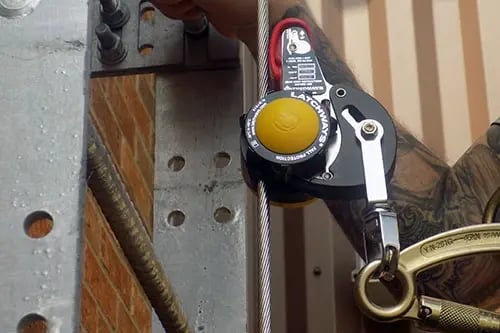
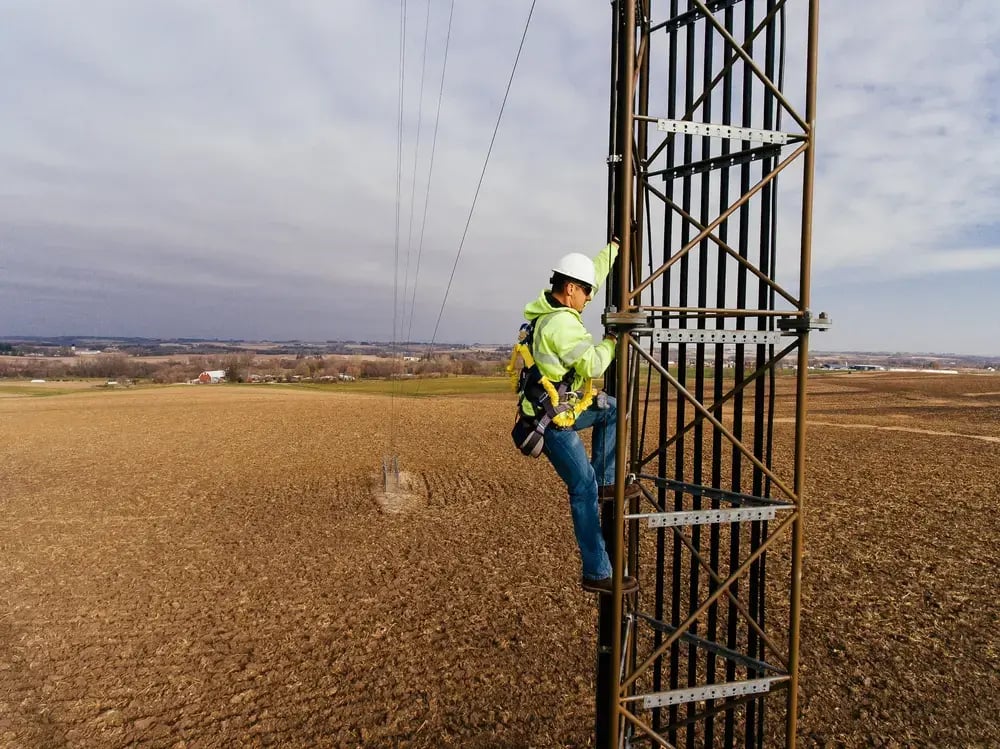
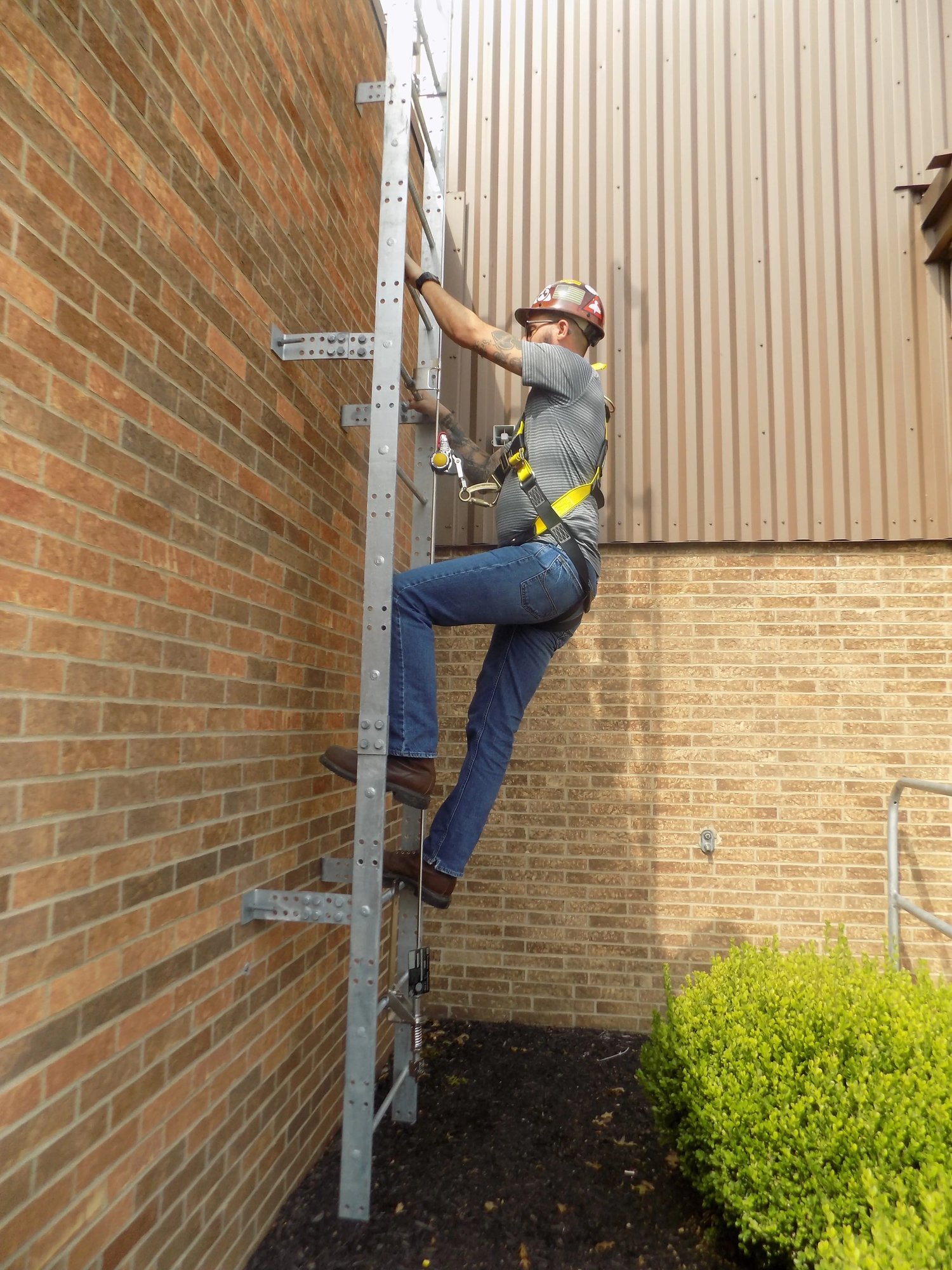
A vertical lifeline allows the worker to move up and down the entire height of the line rather than having to disconnect and find a new tie-off point on the tower or ladder he or she is climbing. Workers connect to the lifeline by a "rope grab" deceleration device that travels along with the worker as they move higher or lower.

Rope grabs on Vertical Lifelines

A rope grab attached to a vertical lifeline is a passive form of protection, allowing the user to move as long as tension is slack on the lifeline. In the event of a fall, the rope grab automatically engages the lifeline with friction and locks arresting the fall of an employee. A rope grab usually employs the principle of inertial locking, cam/lever locking, or both.

According to OSHA…

[(i) "Vertical lifeline considerations." As required by the standard, each employee must have a separate lifeline when the lifeline is vertical. The reason for this is that in multiple tie-offs to a single lifeline, if one employee falls, the movement of the lifeline during the arrest of the fall may pull other employees' lanyards, causing them to fall as well.]

Retractable lifelines automatically retract any slack line between the worker and the tie-off point. This type of line does not require a rope grab. However, you must position a retractable lifeline directly above the worker to eliminate any potential swing hazard if the worker falls.

Temporary or portable ladders commonly found at construction sites, and permanently installed ladders frequently associated with industrial and commercial settings, each present their own fall hazards and demanding unique fall protection solutions.

Once you identify the risks and causes of potential ladder falls, the next step is to implement a safety and training program Contact Diversified Fall Protection to assess your specific requirements. Let us help you start now to mitigate fall hazards.


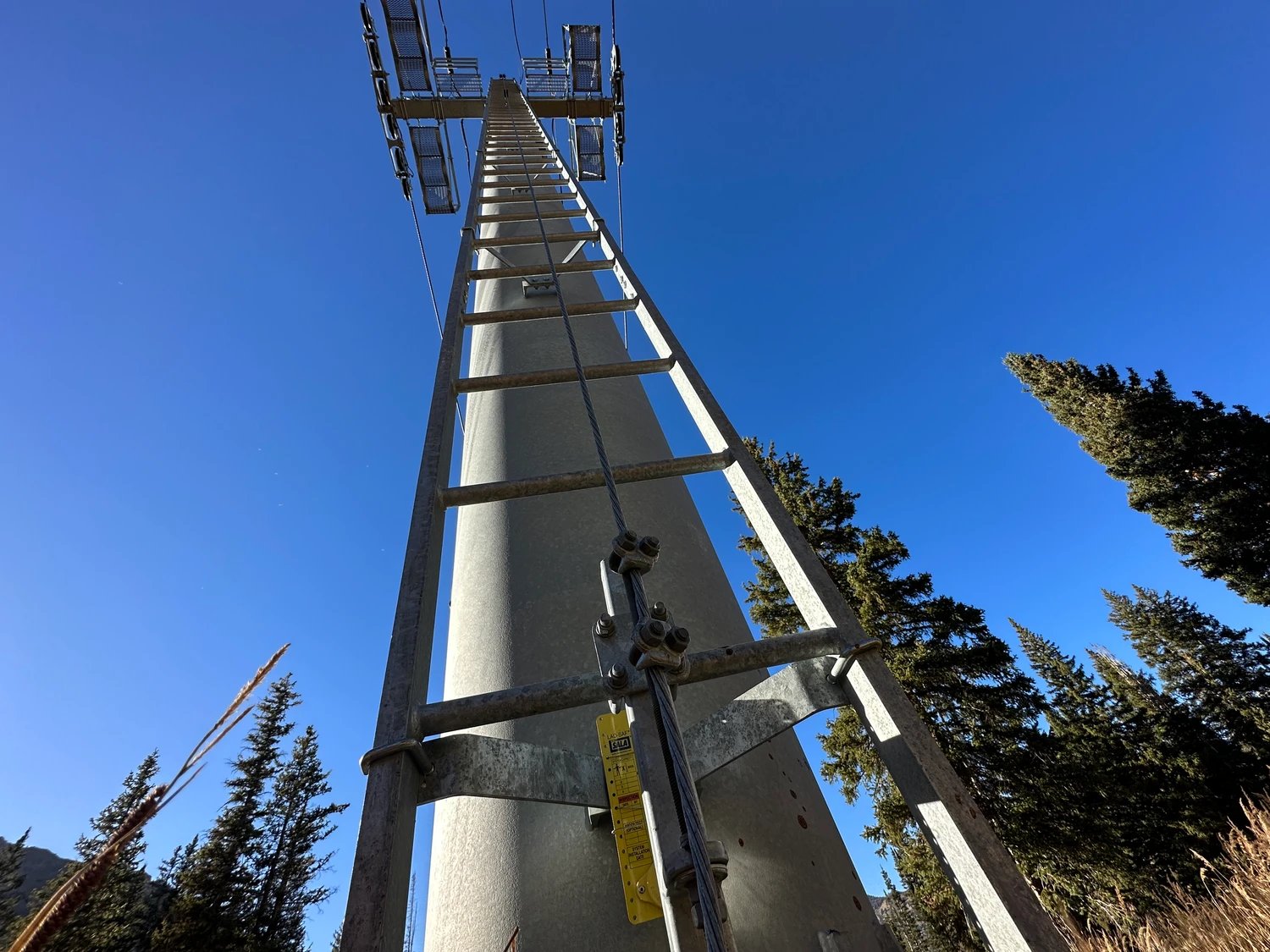
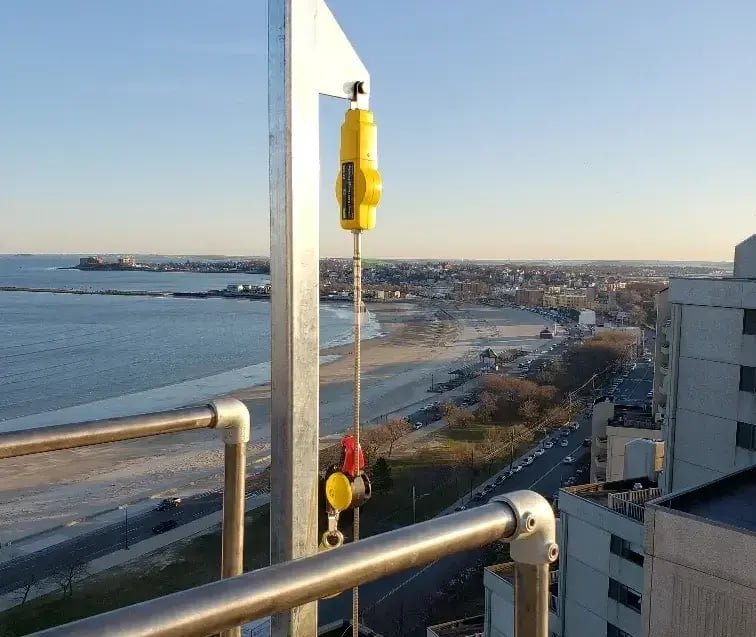
Vertical lifeline for ladder access on a 250 foot tower.

OSHA compliant 30 foot vertical ladder with safety cage.

Single Source Turnkey Responsibility

You receive single source responsibility for the design, engineering, fabrication, installation, training and certification of permanent and temporary fall arrest and fall protection equipment.


Fall Protection /
Fall Prevention
Training Programs

Glossary

FAQs

OSHA Fall Protection
Compliance