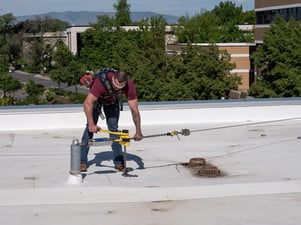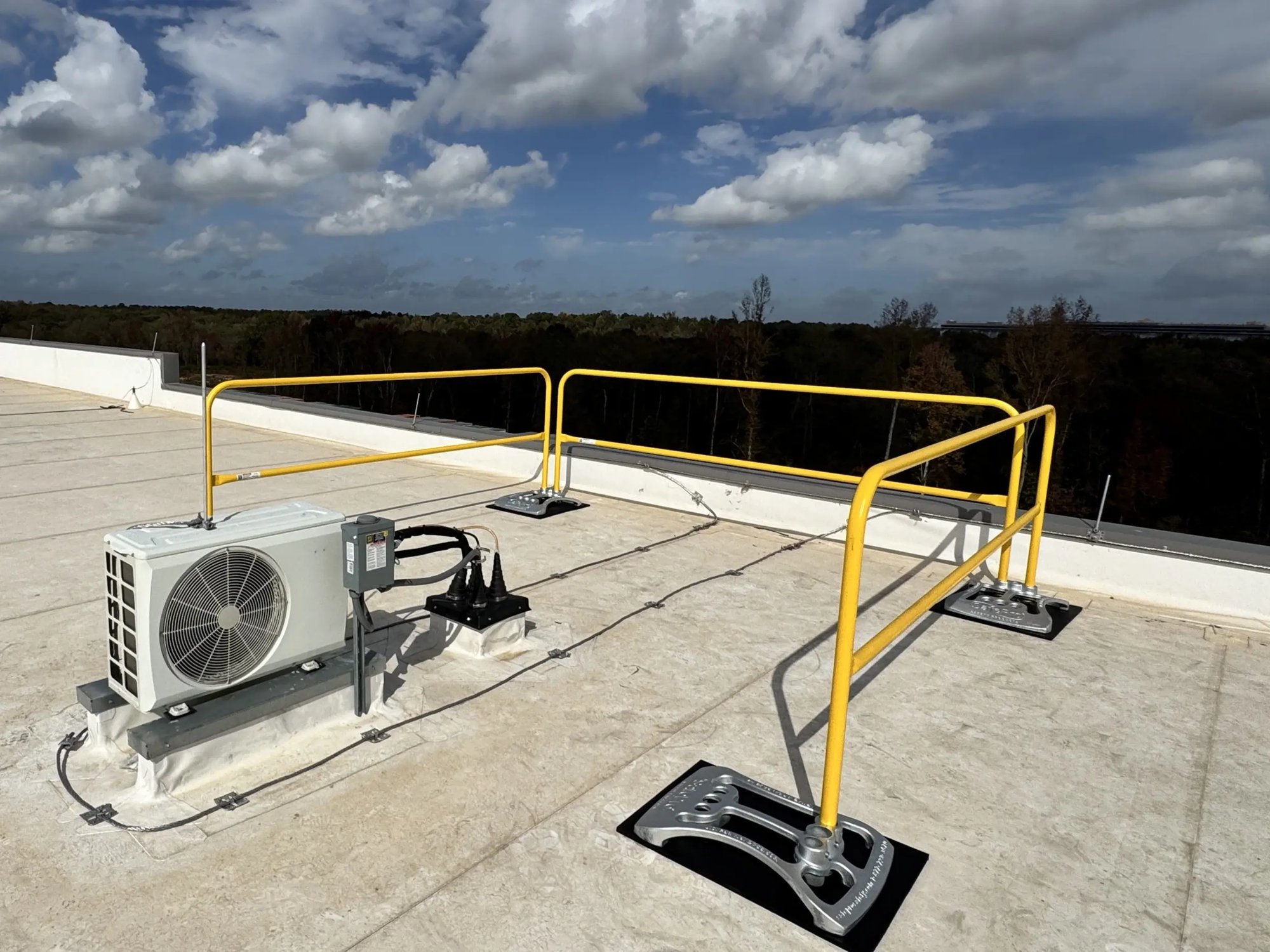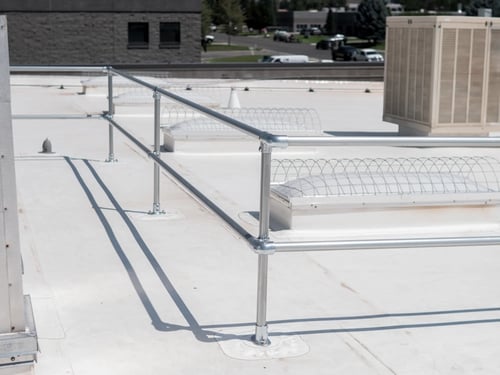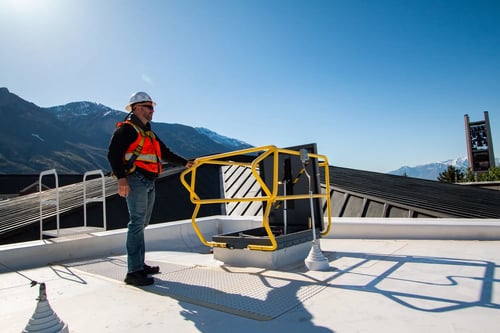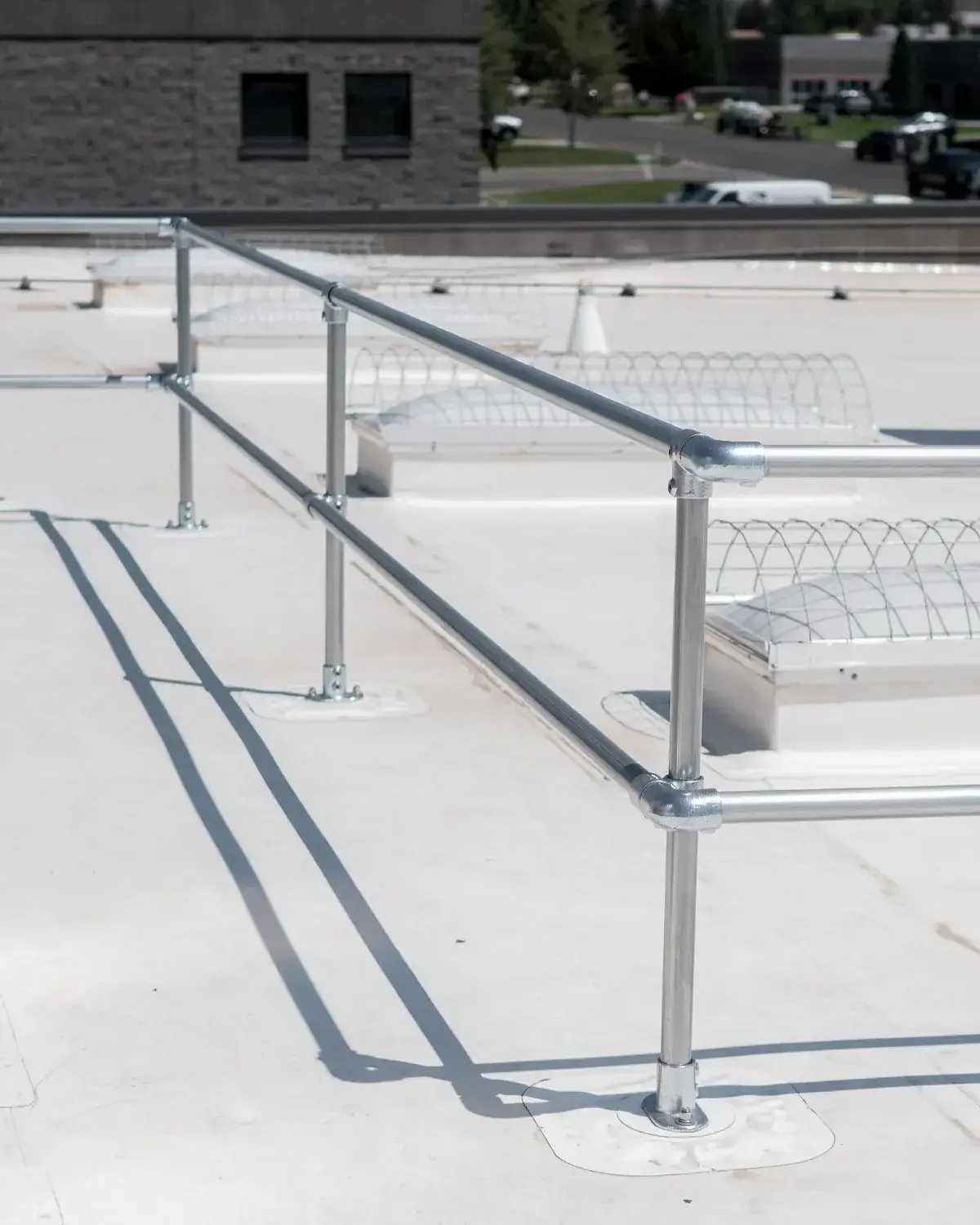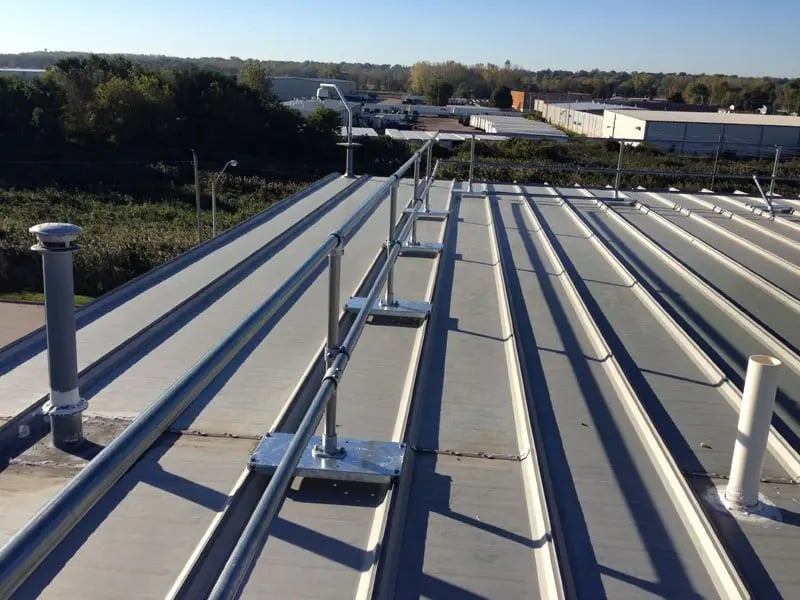
Passive fall protection, like guardrail, means that there is no special training, equipment, or required action on the worker's part needed to be protected from a fall. It also means that the equipment doesn't need to be regularly tested and certified like active fall protection systems do.
Roof Guardrail Systems & Safety Railing
Simple, OSHA-compliant safety railing for rooftops and industrial fall hazards
Roof guardrail systems are one of the simplest ways to protect workers at roof edges, mezzanines, walkways, access platforms, loading docks, roof hatches, and other elevated work areas. Diversified Fall Protection designs, fabricates, and installs safety railing and safety rail systems that help facilities reduce fall risk without requiring every worker to tie off.
Our safety guardrail systems include non-penetrating rooftop guardrails, permanent mounted guardrails, modular guardrail panels, roof hatch railings, swing gates, and custom-engineered rail solutions for complex facilities. Whether you need a temporary safety rail system or a permanent fall protection guardrail system, our team can help you select the right configuration for your roof, workflow, and compliance requirements.
Explore Diversified’s fall protection guardrail or reach out today to start your next project.
Types of Roof Guardrail Systems
Diversified provides rooftop guardrail systems and products in a range of sizes, styles, colors, and finishes.
OSHA-Compliant Safety Railing for Rooftops and Industrial Facilities
A properly specified guardrail system creates passive fall protection, meaning workers are protected by the system itself without needing harnesses, lanyards, or active tie-off procedures. This makes safety railing a strong fit for high-traffic rooftops, maintenance routes, equipment access areas, loading platforms, mezzanines, and roof hatch openings.
For general industry walking-working surfaces, OSHA requires fall protection for employees exposed to an unprotected side or edge 4 feet or more above a lower level, and guardrail systems are one accepted method. OSHA guardrail criteria include a 42-inch top rail height, plus or minus 3 inches, and guardrail systems must withstand at least 200 pounds of force at the top rail; midrails and similar intermediate members must withstand at least 150 pounds.
Diversified helps you evaluate the full application, including roof type, parapet height, deck load, access points, local requirements, and whether a non-penetrating or mounted safety railing system is best.
Roof Guardrail Applications
Whether it's on a rooftop, a loading dock, a mezzanine, guardrail is the ultimate passive solution to protecting workers and maintaining OSHA compliance.
Rooftop Applications
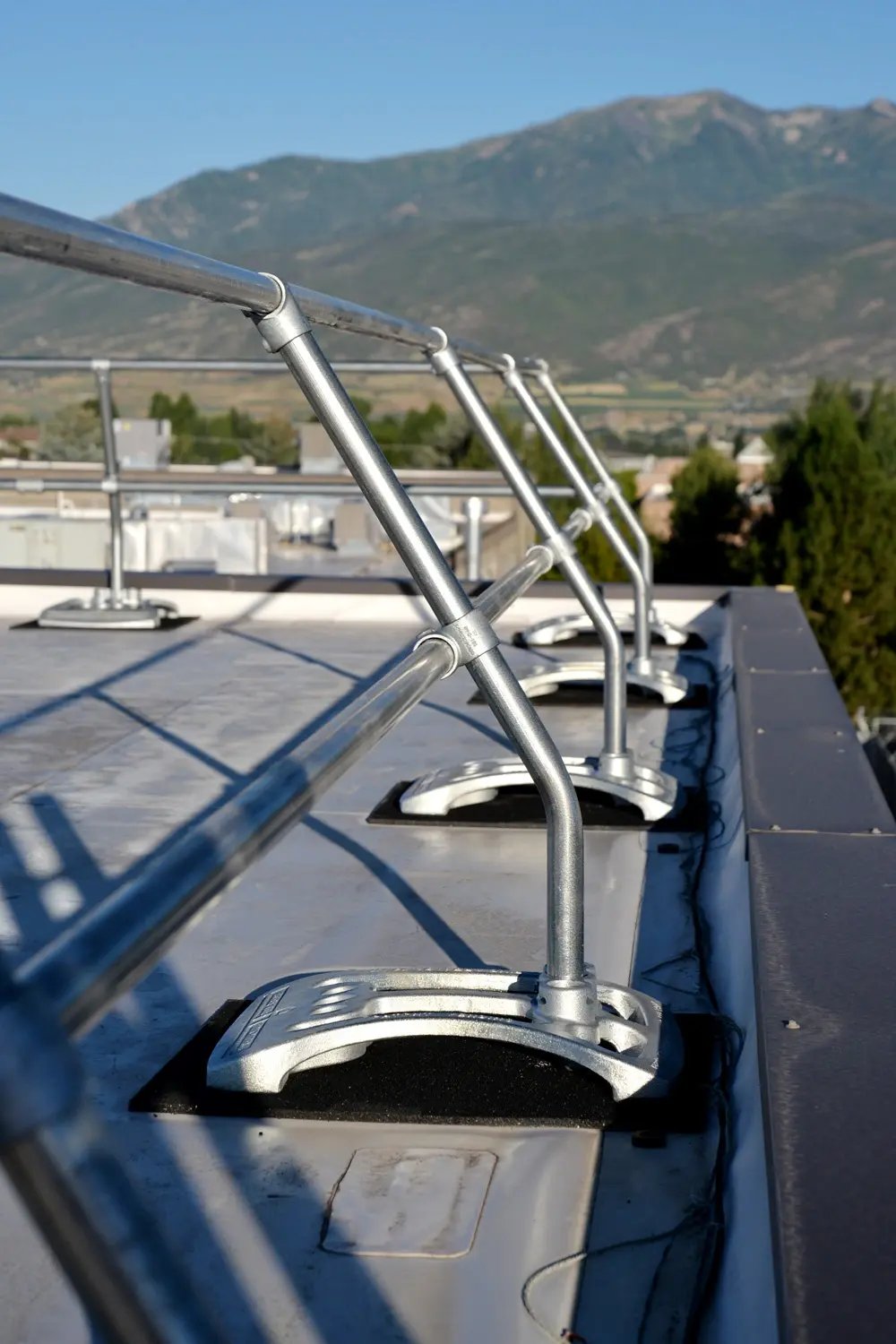
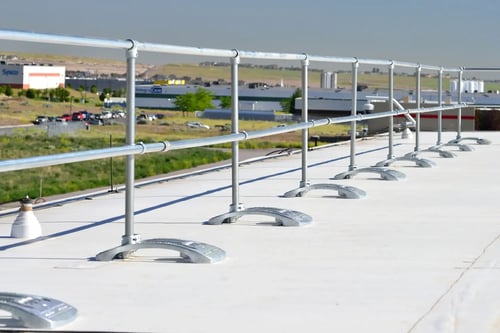
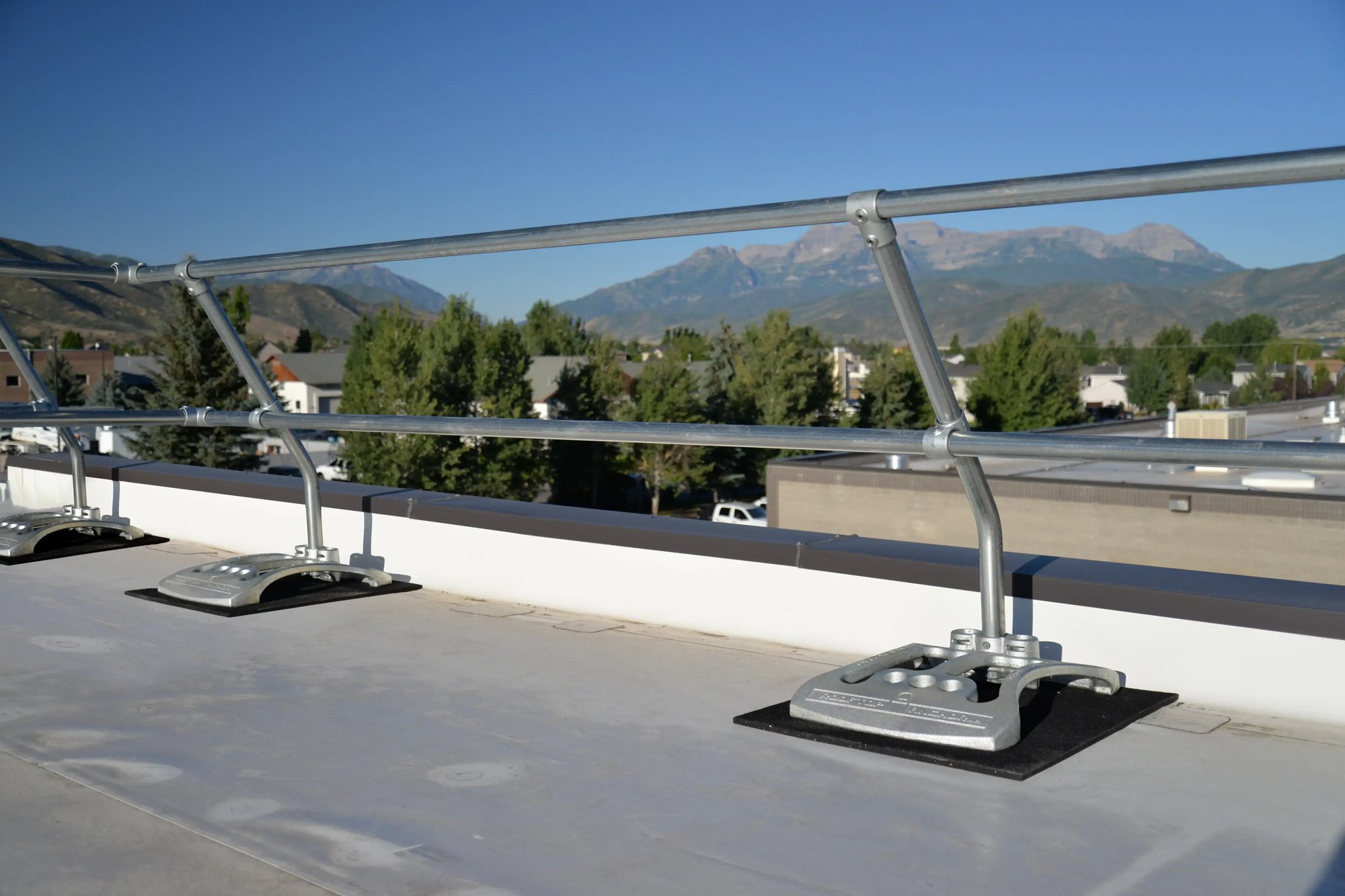
Rooftop guardrail installs easily along roof edges, preventing falls.
Mezzanines
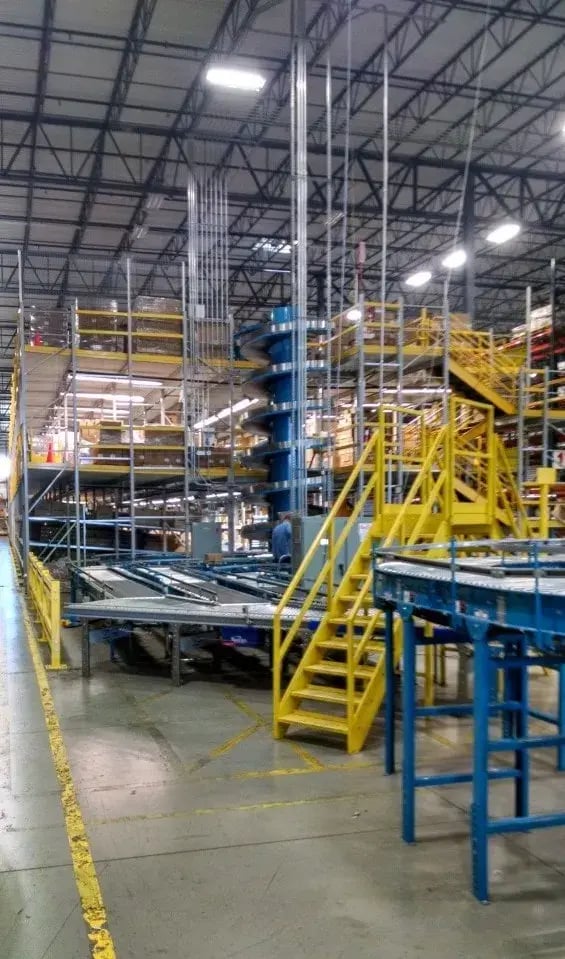
Workers on indoor or outdoor mezzanines benefit from the installation of safety railing solutions.
Access Platforms and Walkways
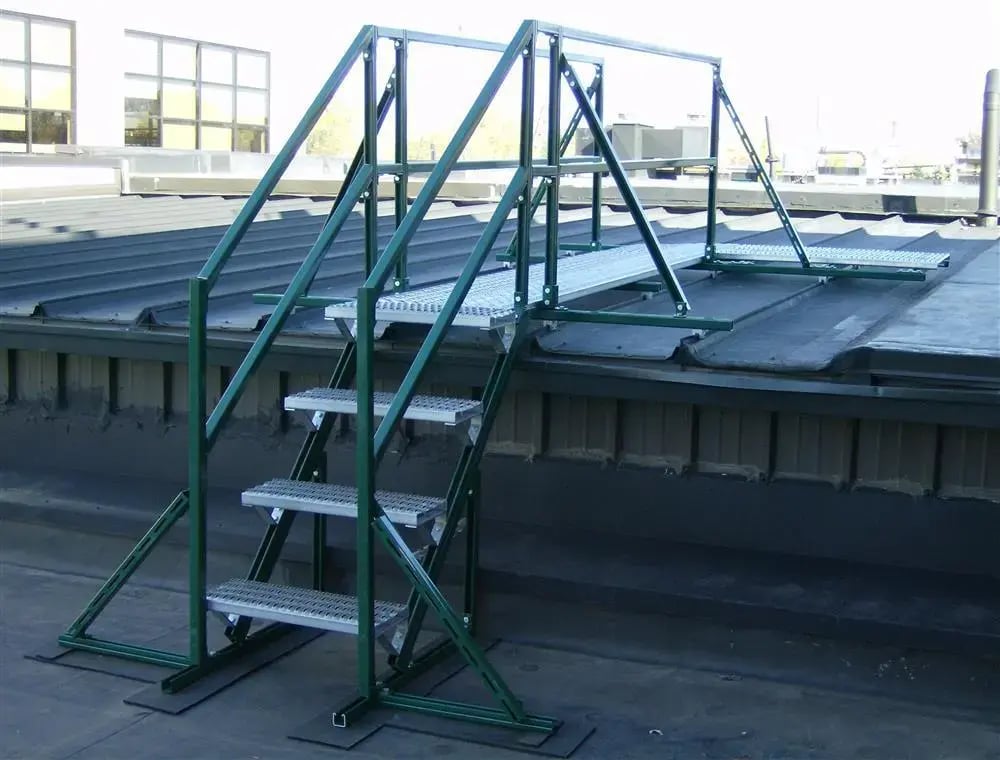
Protect workers while permitting access to platforms, walkways, or equipment.
Cooling Tower Fall Protection
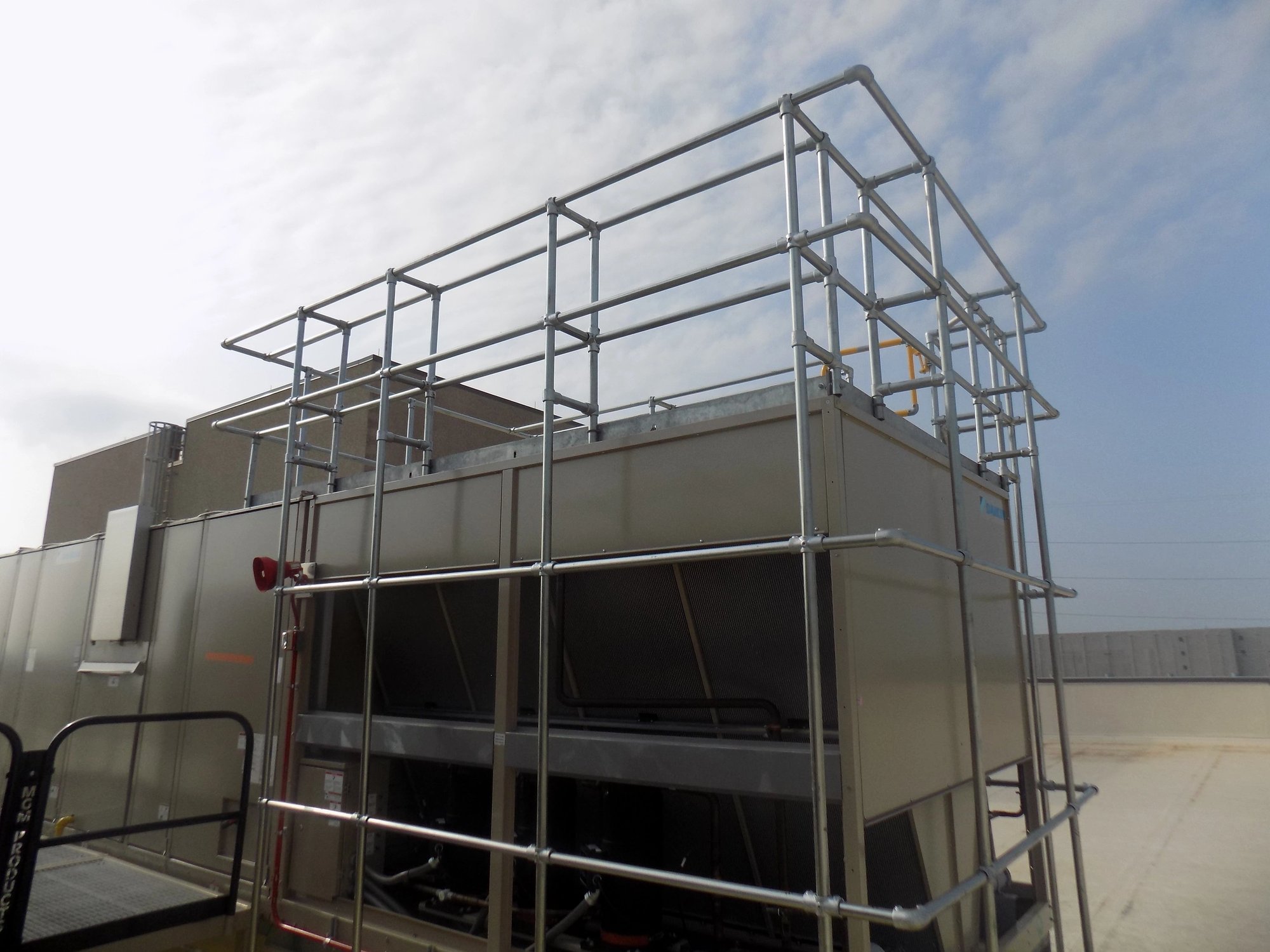
Guardrail solutions designed especially for cooling tower systems.
See Our Roof Guardrail Systems
Roof Guardrail FAQ
Your selection of roof guardrail should take into account your roofing material and desire for penetrating or non-penetrating roof guardrail systems. Consider whether you are seeking a long-term solution or a temporary one, which is easy to set up and remove. Non-penetrating roof guardrail works for both temporary and permanent installations.
You should also pay attention to your local and federal OSHA laws. Guardrail systems in California require compliance with additional Cal-OSHA standards.
Toeboards should be considered where tools, parts, or materials could fall and strike workers or equipment below. OSHA and site-specific requirements may also apply depending on the application.
A properly installed guardrail is a passive fall protection system, so workers generally do not need to wear a harness or connect to an anchor while protected by the railing. Other areas of the roof or facility may still require active fall protection.
Yes. Portable and non-penetrating safety rail systems can be used for temporary maintenance, construction, inspection, or repair work. Permanent systems are better for recurring access routes and long-term rooftop fall protection.
Expert Guardrail Installation and Advice
Diversified offers both structure-mounted and non-penetrating permanent guardrail solutions as well as portable guardrail systems. We can recommend a safety railing system that fits your roof fall protection needs and budget.
Diversified Fall Protection is a complete turnkey provider of OSHA-compliant fall protection systems and has years of experience designing and installing roof guardrail systems. Contact us for expert assistance with your passive fall protection system and other general fall protection requirements.
Roof Guardrail Design Considerations
For rooftop installations, Diversified can design and install a variety of non-penetrating guardrail systems that will not void existing rooftop warranties. Care still must be taken when specifying weighted base guardrail systems to consider the loads applied to the deck.
No matter where it is or how it is mounted, the top rail must be capable of withstanding at least 200 lbs. The mid-rail must support at least 150 lbs. Swing gates can be used as part of a guardrail system to provide easy access to rooftop hatches and other openings.
The use of a toeboard is recommended in areas such as mezzanines and access platforms where dropped items may fall and strike individuals working below. Guardrail systems may be powder-coated safety yellow for high visibility or galvanized.
Benefits of Roof Guardrail & Safety Railing Systems
Cost Effective
Guardrail systems are usually a one and done purchase. Over time you'll save money on additional accessories, training & recertification, and avoid costly downtime or injury expenses since there is no risk of falling.
No Harness Necessary
Unlike other forms of fall protection, roof guardrails don't require workers to wear body harnesses and connect to the system via a self-retracting lifeline or shock-absorbing lanyard.
Less Training Required
Your workers are protected from the moment they set foot on your roof, and you’ll save on training and annual recertification costs over time.
Non-Penetrating Design
Protect your roof from leaks with non-penetrating rooftop guardrail systems.
Made in the USA
Save money on freight and shipping while you support American manufacturing. Diversified Fall Protection manufactures all guardrail systems domestically.

b-1.jpg?width=1368&height=1340&name=Rail%20(175)b-1.jpg)