

b-1.jpg?width=1368&height=1340&name=Rail%20(175)b-1.jpg)
A practical overview of how to set up a proper rooftop fall protection system.
In this article, you’ll learn:
- Why there is no one-size-fits-all solution for rooftop fall protection
- What OSHA 1910, OSHA 1926, ANSI Z359, etc. generally require when it comes to rooftop fall hazards
- How to assess for fall hazards on your rooftop using a practical, repeatable method
- The differences between passive systems, travel restraint, and fall arrest
- How to choose fall protection equipment that is both compliant and practical for daily use
- Why comfort, training, and proper planning matter just as much as the equipment itself
Rooftops vary in slope, parapet height, roof membrane type, skylights, access points, equipment locations, and how often work is performed. Because of this, there is no article that can provide “one size fits all” fall protection solutions. However, this article will address many of the various options and common hazards concerning the well-being of your rooftop workers in order to create the safest, most cost-efficient system for any facility.
If you decide you want a more in-depth analysis of your roof with a fall protection expert, feel free to contact us.
Basic Compliance: Legally required fall protection
In the general industry (essentially everything other than construction work), fall protection is required for workers on walking/working surfaces with an unprotected side or edge 4 feet or more above a lower level.
OSHA regulations also specify that any gap at least 2 inches in its smallest dimension is considered a hole in the ground that requires some form of fall protection, such as a cover or guardrails. Many building owners overlook skylights or roof hatches as holes or openings, but OSHA specifically requires fall protection around those as well. Annually, over a dozen workers die every year from rooftop falls through skylights, hatches, openings, etc.
When a personal fall arrest system (PFAS) is used, OSHA defines it as a system that consists of an anchorage, a connection device, and a body harness. Many in the fall protection industry refer to these essential components as the ABC(D)s of fall protection:
- Anchorage
- Body Harness
- Connecting Device
- Descent and Rescue plan (because a rescue plan is required by OSHA anytime a fall arrest equipment is in use)
Employees who use a PFAS system and/or are exposed to fall hazards must be authorized by their employer to do so and be provided with initial fall protection training. This Authorized Person training must educate workers on how to recognize fall hazards, the proper use of equipment, and the procedures in place to prevent fall injuries.
Bottom line: Compliance is about the entire setup being used properly (hazard identification + right system + correct use + training + inspection + rescue planning), not just buying a system or a harness.
How to assess your rooftop for fall hazards
While many rooftops have very similar fall hazards (unprotected edges, skylights, ladder access points, etc.), the details regarding those hazards and the solutions that will work best for your rooftop will vary.
Diversified uses the APRON(S) Method as a practical roadmap for rooftop hazard assessments:
- Access Points
- Perimeter
- Rooftop Equipment
- Openings
- Navigation
- Suspended Access
This method reinforces a key truth: the "best" fall protection plan depends on roof access routes, trip hazards, edge conditions, openings like skylights, where equipment is located, and how people move around the roof. We recommend taking a walk on the rooftop with a Competent Person and a worker who regularly performs rooftop tasks to get a look at both the ideal situation and what actually happens. When it comes to fall protection, the solution that workers will use correctly each & every time is often the most effective solution.
%20method.webp?width=926&height=461&name=APRON(S)%20method.webp)
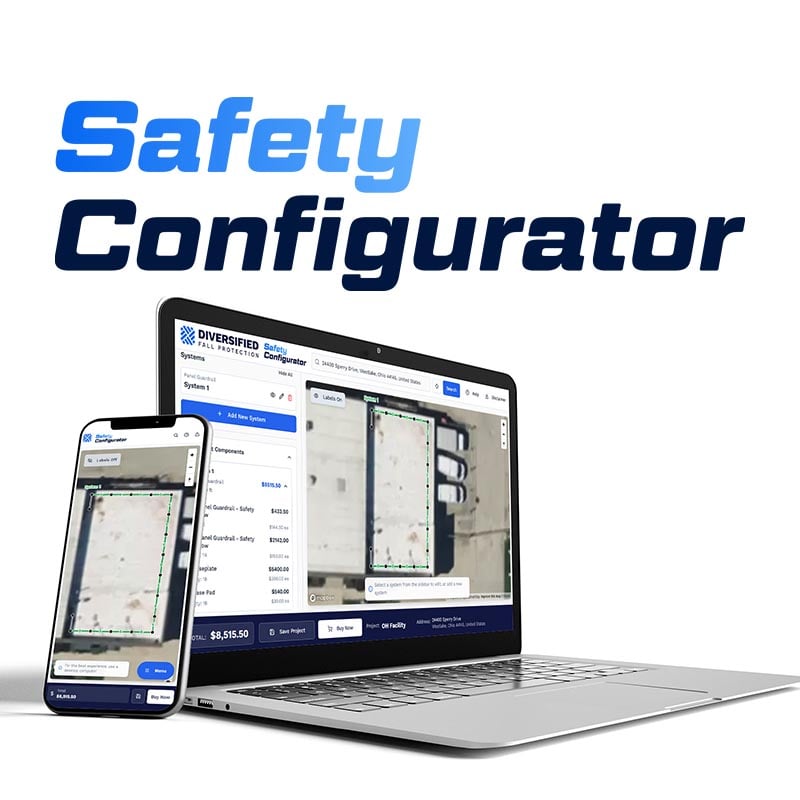
Diversified offers both on-site and virtual hazard assessment services that cite relevant OSHA and ANSI standards and provide hierarchy-based recommendations.
The roof fall protection "system": controls & equipment working together
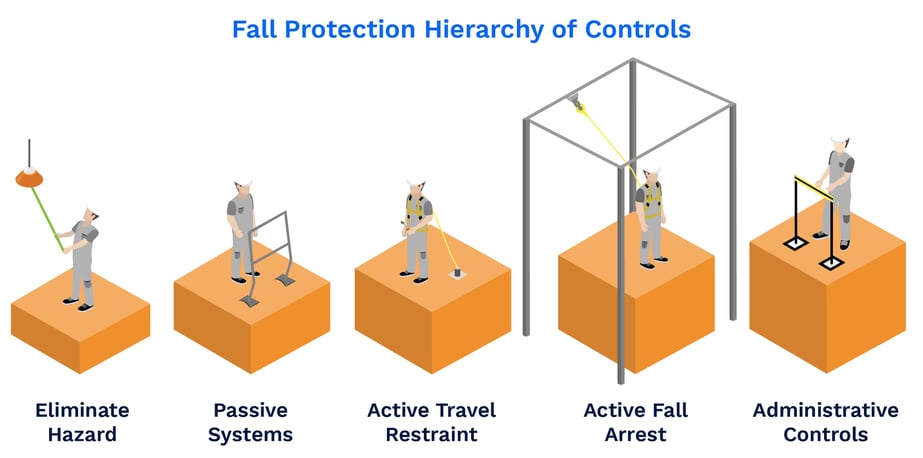
After assessing the hazards, a good roof plan follows the hierarchy of controls mindset: prioritizing solutions that eliminate or prevent exposure, and only use active systems/PPE when hazard elimination is infeasible. From most to least effective in regards to preventing injury to the worker, the hierarchy includes:
- Hazard elimination: Removing the need for the worker to work at height and eliminating the chance of injury
- Passive fall protection: Requires no training for the worker and passively protects the worker (virtually eliminating the chance of injury)
- Active travel restraint: Requires worker training and a PFAS, but prevents the user from reaching the hazard
- Active fall arrest: Requires worker training and a PFAS, and the worker is still exposed to the fall hazard. PFAS can prevent fatality, but minimal injury can still be possible. If their harness is not adjusted correctly or the incorrect connection device is provided, major injury or fatality can still occur.
- Administrative controls: Meant as a temporary solution, and the least effective solution in preventing injury or fatality. The worker is fully exposed to the fall hazard and has no protective gear to arrest their fall. These solutions should only be used in the pursuit of installing more robust fall protection
Types of roof fall protection equipment
Passive rooftop systems (protect people without relying on PFAS for tie-off)
If hazard elimination is not possible, passive systems (AKA guardrail) are our preferred solution. They are often the simplest way to drive consistent protection because they don't depend on perfect worker behavior every minute of the day. As long as the worker stays behind the guardrail, they will not be exposed to the fall hazard. Additionally, no worker training is required, and the lifespan of a quality guardrail system can last 15-20 years.
Common passive rooftop equipment includes: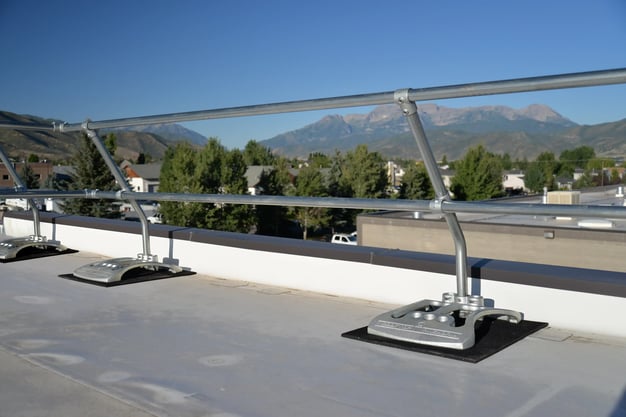
- Non-penetrating weighted base guardrails (ideal when trying to limit rooftop penetration)
- Skylight guards/screens/covers (because OSHA treats skylights like roof openings/hazards)
- Roof hatch rails / opening protection (to protect around access points and openings)
Diversified's top safety solutions commonly include combinations of weighted base guardrails, skylight guards, roof hatches, and roof hatch rails. Most rooftops require a myriad of solutions in order to address every specific fall hazard. Our contoured guardrail has been a customer favorite because it keeps users further away from the roof’s edge and also helps “hide” the guardrail when looking from the ground level.
Active systems: travel restraint & fall arrest
Active systems require additional training on proper equipment use and how to safely connect into the system. There are two main types of active systems: travel restraint and fall arrest.
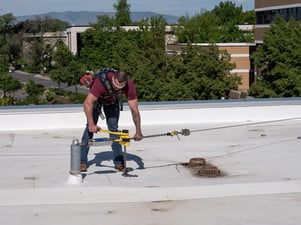
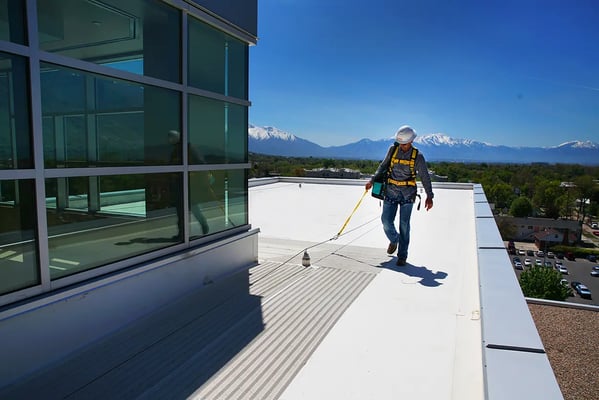
Travel restraint is designed to prevent a fall by limiting how far a worker can travel (so they can't physically reach the edge or opening). A travel restraint system is typically composed of the worker connected to either a horizontal lifeline, rigid rail, or an anchor point. These systems are simple to use and are usually less expensive than guardrail, but require extreme diligence from the user. Disconnecting from the system at any time removes any form of fall protection the user may have.
Fall arrest is designed to stop a fall if it occurs, and it introduces additional requirements like minimum required fall clearance, rescue planning, and a 5,000lb-rated anchor point.
According to the Hierarchy and general industry consensus, fall arrest systems should only be used when exposure to an unprotected edge simply cannot be avoided. However, as mentioned above, the system itself isn't enough. Once a worker falls, they are at risk of developing suspension trauma (AKA orthostatic intolerance), which, if left hanging long enough, could expose them to severe health complications and even death. This is why a swift rescue plan (that relies on other workers, since the suspended worker may be unconscious) is a vital component of any fall arrest system. Calling 911 is a good part of a rescue plan, but employers are required to be able to self-rescue fallen workers.
What are the best roof safety harnesses?
If your system requires a harness, the best roof safety harness is usually the one that is:
- Appropriate for the job (arrest vs restraint vs positioning as applicable)
- Comfortable enough to be worn consistently
- Compliant with OSHA/ANSI standards
The "best harness isn't the most expensive" rule
A fall protection harness that has great technical specs and/or comes with extra features but is uncomfortable for the worker is often left on the sidelines despite all its bells & whistles, so to speak. The real-world best harness is the one your team will wear correctly, every day, because it fits the worker and the job they must perform. A good way of testing this out is purchasing 2-3 harness models that match your most common roof tasks, then perform a short wear test for comfort and mobility with actual users (kneeling, bending, carrying, climbing, reaching). Never hesitate to reach out to your fall protection harness manufacturer, because they will often provide free samples of harnesses to help evaluate the best one for your crew.
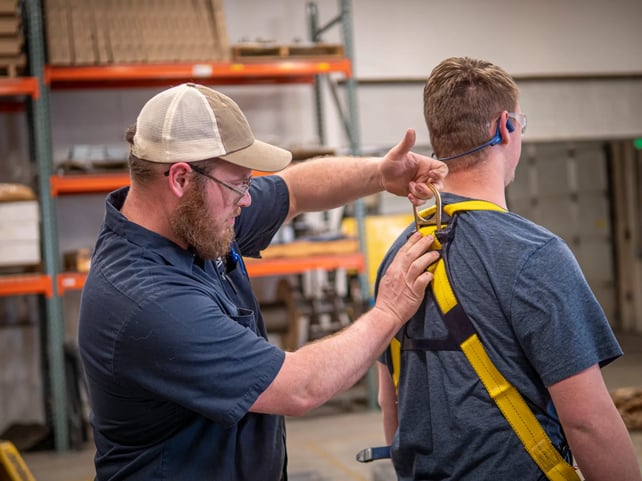
If you are wondering where to get started when looking for harnesses, we sell some of the most recognized brands at our distribution store. Check it out today
Don't overlook the "non-equipment" requirements: training, inspection, and documentation
Equipment is only reliable when used and maintained correctly.
Training: OSHA requires fall hazard training for exposed workers. Diversified provides comprehensive training programs (including Competent and Authorized Person training) designed for real jobsite use. These trainings are best completed at your job site so workers can be trained for the specific hazards and risks they will be exposed to on a regular basis.
Pre-use inspections: Industry standards require PFAS inspection before each use.
Annual/periodic system inspections: OSHA requires every piece of fall protection equipment to be inspected by the organization’s Competent Person on an annual basis. Annual equipment inspections must be recorded and should be kept handy until the equipment is taken out of service.
In Summary
Rooftop fall protection is most effective when it is planned with the specific roof, work tasks, and workers in mind. While OSHA 1910 (general industry) & OSHA 1926 (construction) standards provide the framework for compliance, the safest and most cost-effective systems are those that are properly assessed, correctly selected, and consistently used. By understanding your rooftop hazards, prioritizing elimination and passive solutions where possible, and supporting active systems with training, inspections, and rescue planning, you can create a fall protection program that works in the real world—not just on paper. If you’re unsure where to start or want expert guidance tailored to your facility, working with fall protection experts can help ensure your system remains compliant, practical, and built to last.