NCCI data published by the National Safety Council show an average cost of $54,499 for lost-time claims involving falls or slips for injuries occurring in 2022–2023. This is a broad injury category, not an estimate specifically for rooftop falls or other falls from height. Individual claim costs vary.
Fall Protection Resources for Insurance Professionals
Understand the Exposure. Make Informed Recommendations.
Workplace falls can result in serious injuries, prolonged recovery, and costly claims. For insurance professionals, understanding how these incidents happen—and how employers can prevent them—is an important part of evaluating risk.
This resource brings together workplace fall statistics, practical review questions, and educational guides to support conversations with clients about fall protection. Explore how hazards arise, what effective protection involves, and which information can help you evaluate a client’s approach.
The Human and Financial Cost of Workplace Falls
The consequences of a fall extend beyond the initial incident. An injured worker may face lasting physical limitations, while the employer manages lost work time, disrupted operations, and the circumstances that allowed the incident to occur.
$54,499 Average Workers’ Compensation Claim Cost
Falls or slips averaged $54,499 per lost-time workers’ compensation claim for injuries occurring in 2022–2023, according to National Council on Compensation Insurance data published by the National Safety Council.
This figure reflects claims in states where NCCI collects data. It includes the broader falls-or-slips category and should not be interpreted as the average cost of a fall from height, a settlement amount, or a total of insurance payouts nationwide.
600+ Fatal Falls to a Lower Level
The Bureau of Labor Statistics recorded 666 workplace deaths from falls to a lower level in 2024 across U.S. industries. These incidents illustrate why elevated work deserves attention wherever it occurs, including maintenance and servicing activities.
Approximately 38% of Construction Fatalities
Falls to a lower level accounted for 389 of 1,034 construction fatalities in 2024. OSHA identifies falls as the leading cause of death in construction.
Together, these figures demonstrate the severity of fall-related incidents. They measure different outcomes and populations; the claim-cost average should not be multiplied by the fatality counts to estimate total losses.
Fall Exposure Extends Beyond Construction
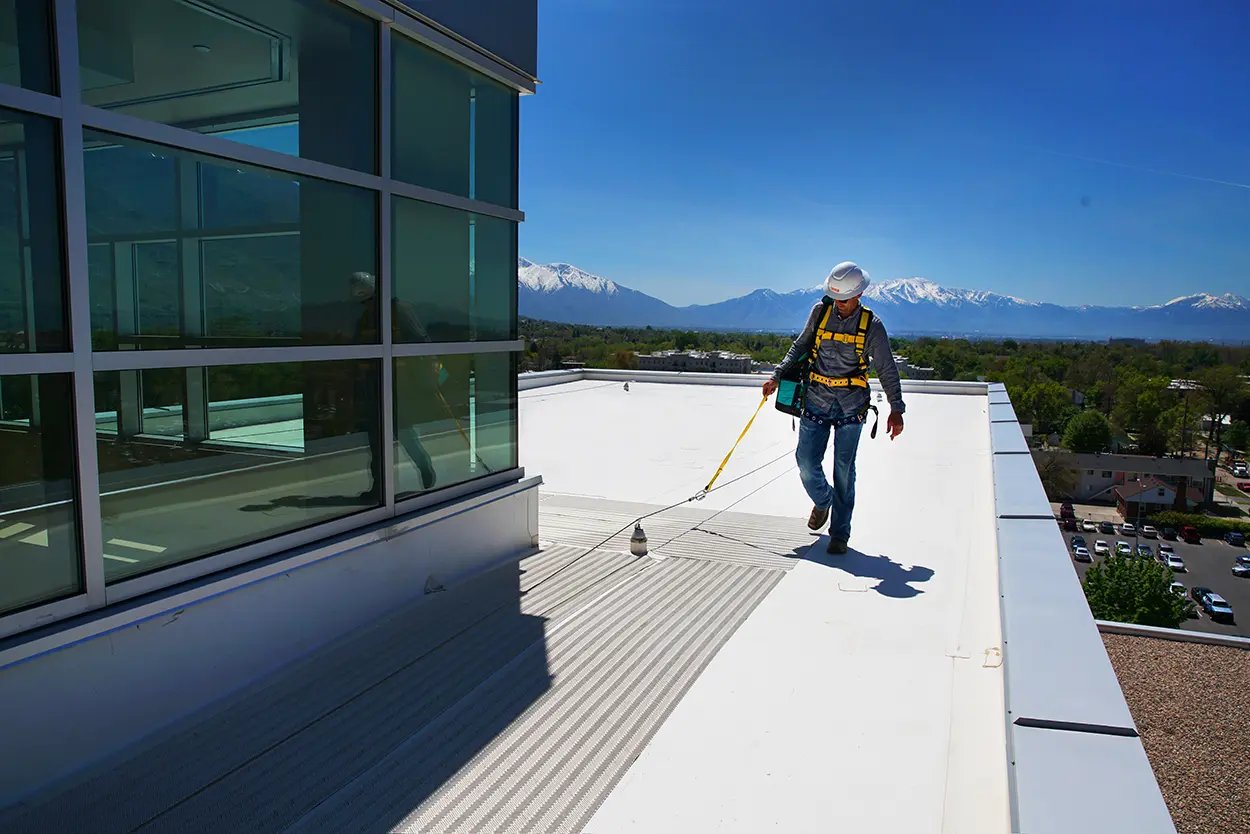
A client does not need to employ roofers or steelworkers to have fall hazards. Routine building maintenance, equipment servicing, and loading activities can place workers at height.
| Work area | Exposures to consider |
|---|---|
| Commercial rooftops | Access to HVAC equipment, drains, and exhaust fans near unprotected edges or openings |
| Roof hatches and skylights | Open access hatches and skylights without suitable fall-through protection |
| Ladders and access routes | Climbing, entering, and exiting elevated work areas |
| Machinery and platforms | Elevated maintenance tasks, exposed platform edges, and floor openings |
| Trucks and railcars | Loading, inspection, cleaning, or servicing performed on top of vehicles |
Consider both frequent work and occasional tasks. Asking how a worker reaches an elevated area can reveal exposures that a review of the task alone may miss.
What Should Insurance Professionals Ask About Fall Protection?
A useful review goes beyond confirming that equipment is available. It considers whether protection addresses the work being performed and whether the organization has the procedures and knowledge needed to use it.
Have Fall Hazards Been Identified?
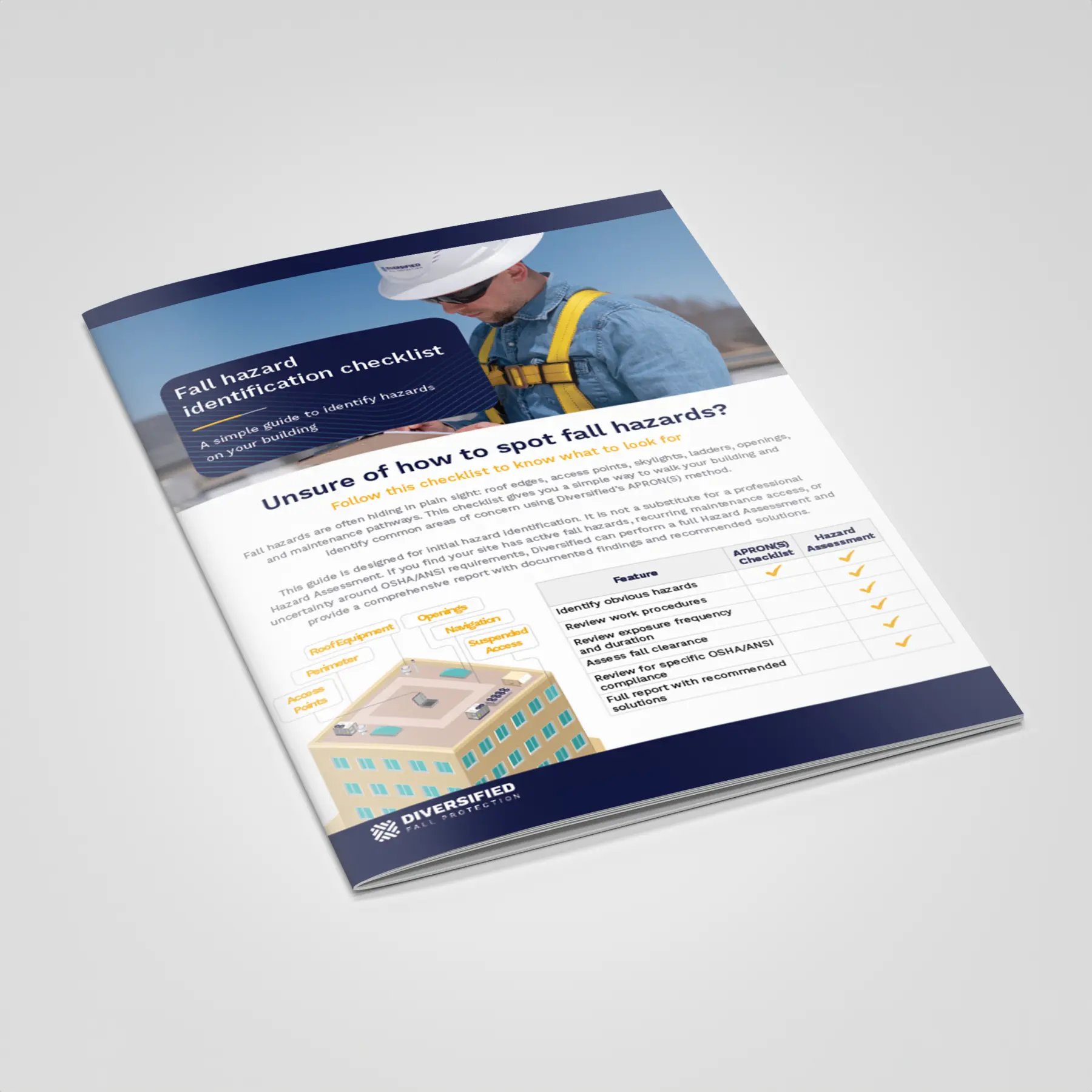
Ask whether the client has reviewed elevated work throughout the facility, including access routes, maintenance activities, and work performed by contractors. Assessments should reflect current conditions and be reconsidered when equipment, layouts, or work practices change.
Does the Protection Match the Task?
A harness or anchor does not establish that an entire work area is protected. The review should consider where employees need to move, whether the components are compatible, and whether the system is appropriate for the exposure.
Are Workers Prepared to Use the System?
Ask how workers receive instruction on the equipment they use, the hazards they face, and the procedures they must follow. Training should address the actual work environment and the responsibilities of the people involved.
Are Inspection Findings Addressed?
Inspection records are more useful when they show how deficiencies were resolved. Ask how damaged equipment is removed from service, who tracks corrective actions, and how the client confirms completion.
Is Rescue Addressed Where Fall Arrest Is Used?
Stopping a fall is only one part of protecting a worker. Review whether the client has considered how a suspended worker would be recovered and whether the people responsible are prepared to carry out the plan.
Understanding How Fall Protection Controls Risk
Different approaches address fall exposure in different ways. Understanding these distinctions can help insurance professionals ask more useful questions about the protection a client has selected.
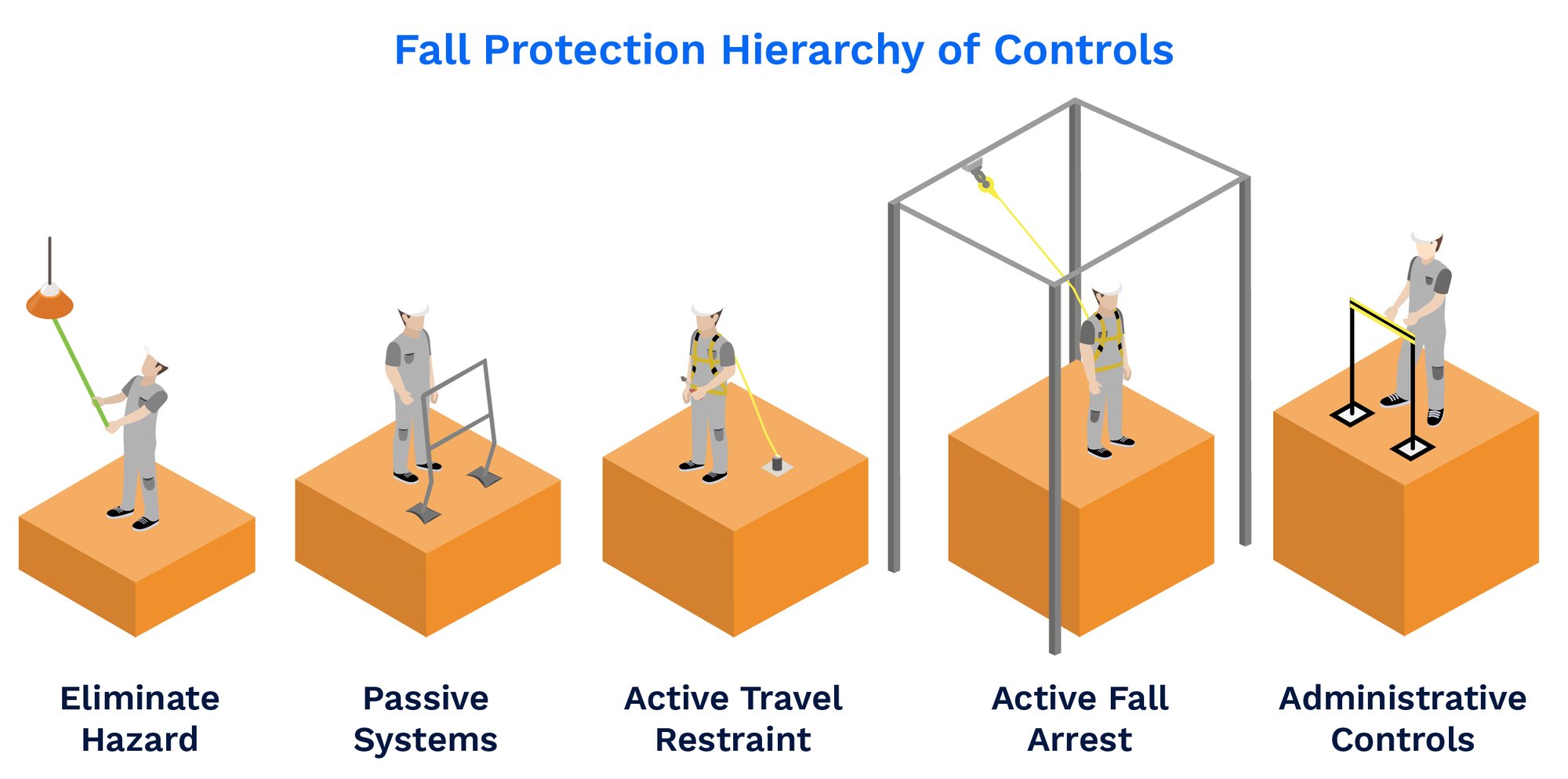
Hazard elimination: Changing the task or relocating service points may remove the need to work at height.
Passive protection: Guardrails, suitable covers, and skylight screens provide physical protection without requiring workers to connect to an anchorage each time they enter the protected area.
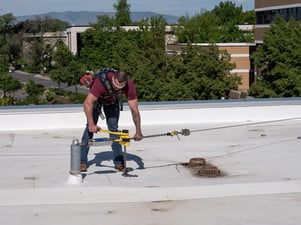
Travel restraint: A properly configured system limits movement so the worker cannot reach a fall edge.
Fall arrest: A system stops a fall after it begins. Its suitability depends on factors including anchorage, compatible equipment, available clearance, swing-fall exposure, and rescue arrangements.
The hierarchy of fall protection prioritizes preventing exposure and preventing falls before relying on equipment to arrest them. The appropriate approach must account for the task and site conditions.
Documentation That Supports a Meaningful Review
Documentation helps connect a client’s stated safety practices to the conditions and procedures in place. Depending on the work and systems involved, useful information may include:
- A current fall hazard assessment identifying locations and tasks.
- System drawings, installation records, and manufacturer instructions.
- Applicable equipment and system inspection records.
- Training records describing the instruction provided.
- Rescue procedures for work involving fall arrest.
- Corrective-action records showing how identified deficiencies were addressed.
The objective is to understand whether the client has identified its exposures, selected appropriate controls, and established a process for keeping those controls effective.
Fall Protection Guides and Further Reading
Use these resources to strengthen your understanding or support educational conversations with clients.
Understanding the Hierarchy of Fall Protection
Learn how hazard elimination, passive protection, travel restraint, and fall arrest differ—and why those differences matter when evaluating a protection strategy.
Roof Fall Protection Equipment Explained
Explore common rooftop hazards and the considerations involved in selecting protection for the work area.
Fall Safety and Rescue Planning
Understand why rescue planning belongs in the fall protection conversation and what organizations should consider before an incident occurs.
Frequently Asked Questions
Equipment availability is only one part of the review. Its suitability for the task, compatibility, condition, correct use, and supporting procedures also matter.
Include contractor activities when identifying where elevated work occurs. Ask how site hazards, available protection, access procedures, and safety responsibilities are communicated before work begins.
A checklist can help organize an initial review and identify questions. It does not replace the technical evaluation needed to determine whether a particular system or approach is appropriate for the site.

b-1.jpg?width=1368&height=1340&name=Rail%20(175)b-1.jpg)